
Household Insecticide Smoke Generator: What 3% + 3% Buys
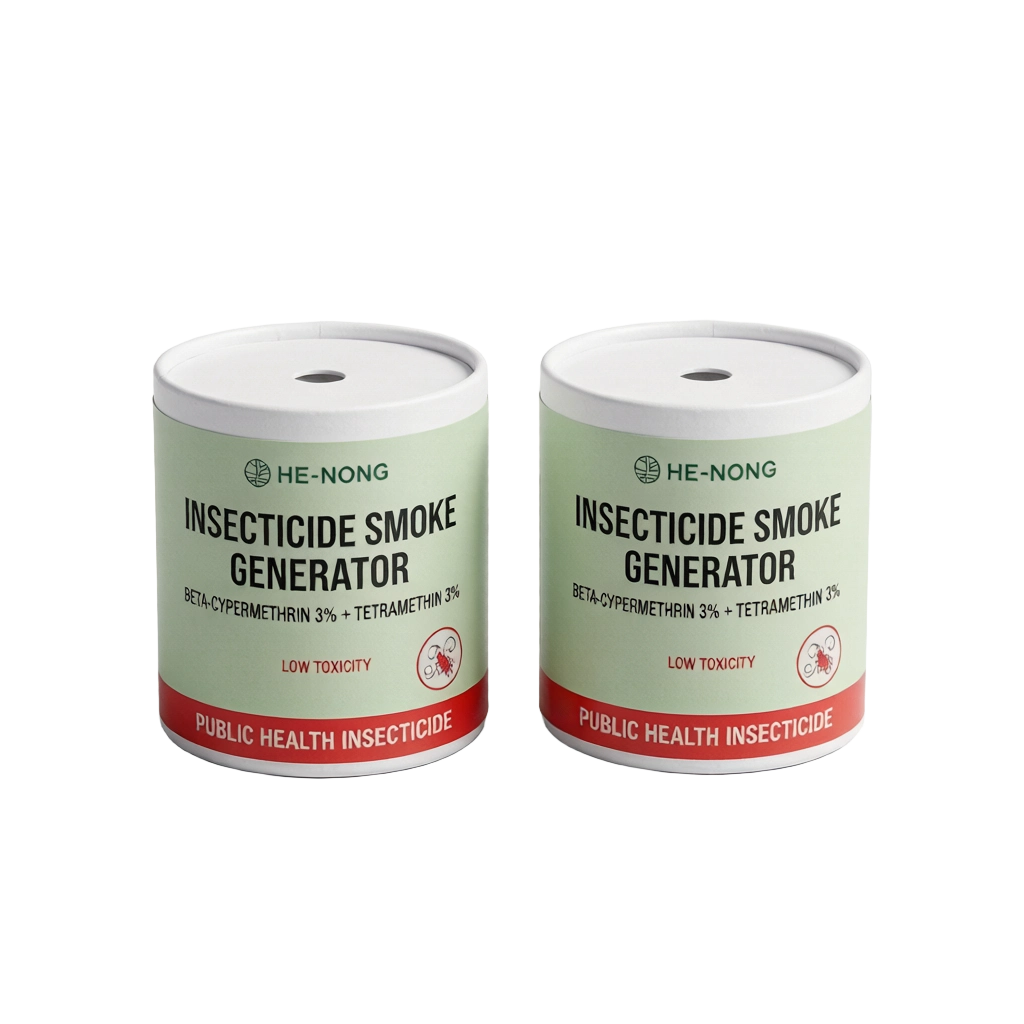
Two percentages on a smoke generator label are not a total. Both actives sit in IRAC 3A, so the pair works as knockdown plus persistence, not as a rotation.
Glyphosate 95% TC vs IPA Salt 41% SL: Normalize First
A 95% TC quote measures acid by mass; a 41% SL measures IPA salt by volume. Normalize both, check two impurity denominators, and write the RFQ that way.
MCPA 95% TC: The Specification That Only Looks Familiar
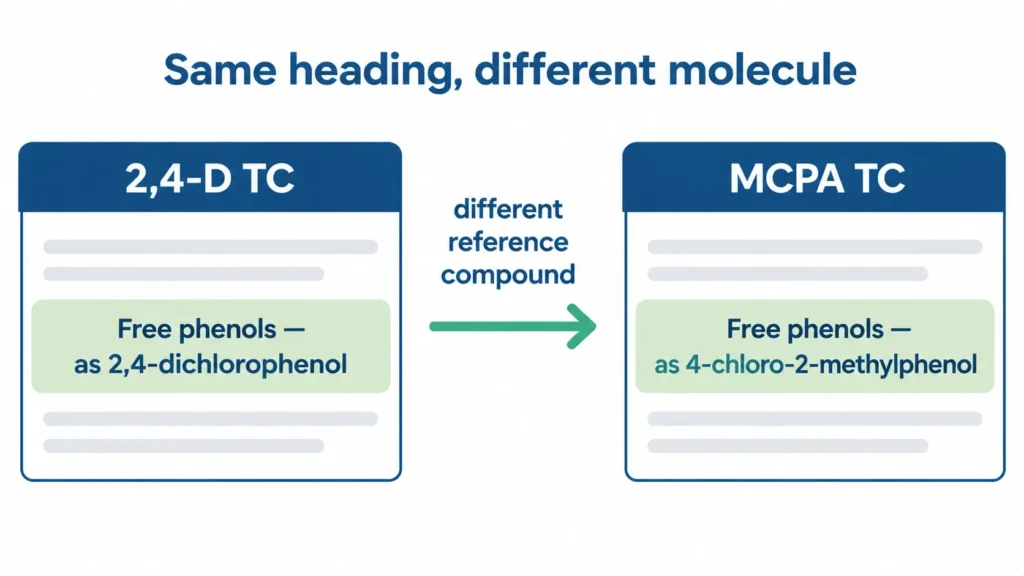
MCPA and 2,4-D specs share every heading but none of the numbers. Free phenols are measured against a different molecule, and the limit is three times higher.
MCPA vs 2,4-D: One Methyl Group, Different Selectivity
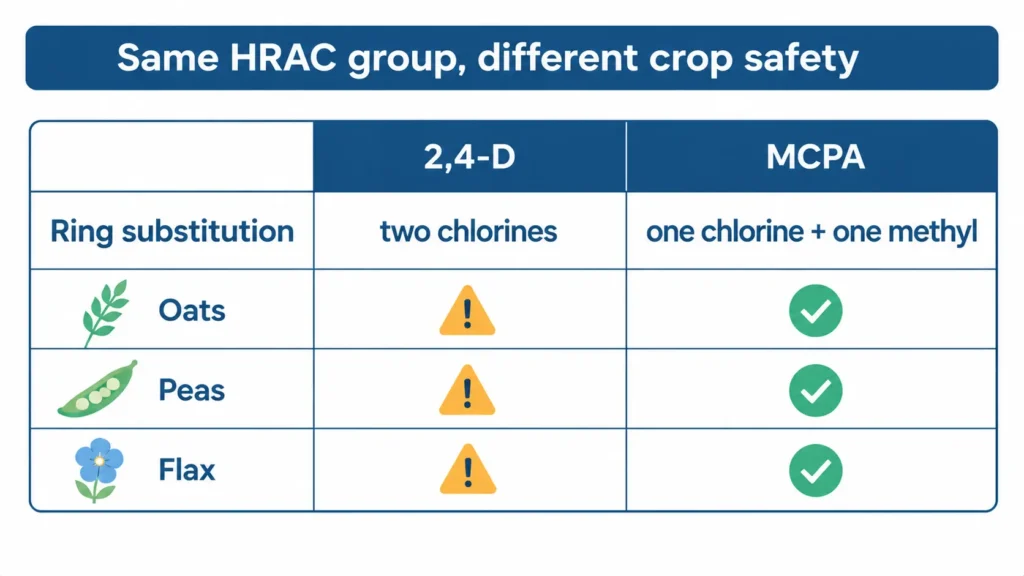
MCPA and 2,4-D share a mode of action but not a crop-safety profile. Where oats, peas, flax and cold conditions decide which one a buyer should order.
2,4-D Sodium Salt 85% SP: Dissolution and Storage
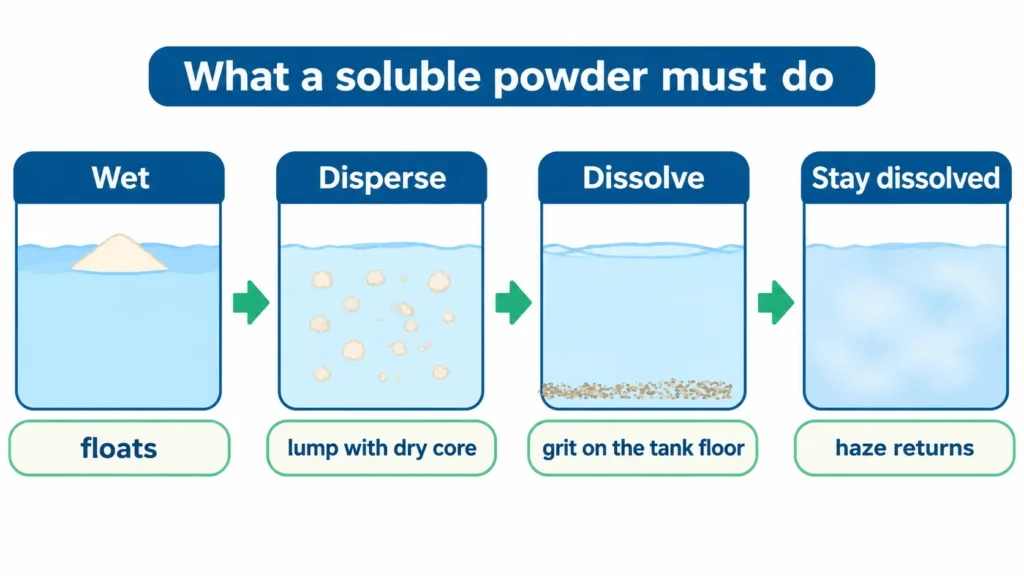
A soluble powder hides its quality until it meets water. Test wetting, dissolution, sieve residue, dust control and caking on 2,4-D sodium salt 85% SP.
2,4-D Isooctyl Ester 900 g/L EC: Reading Emulsion Stability
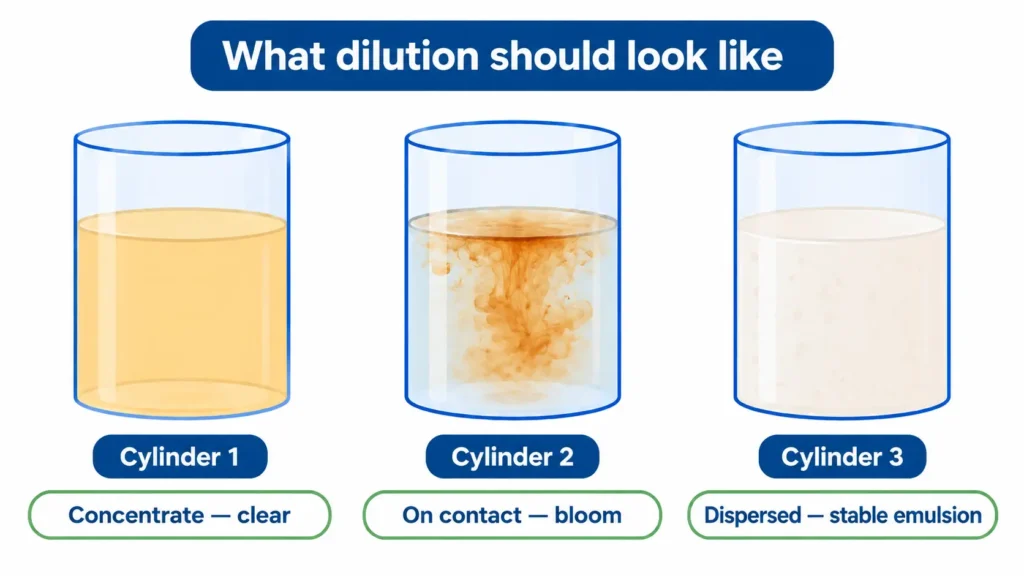
An EC is a delivery system, not a concentrate. Read the bloom, cream and free oil on 2,4-D isooctyl ester 900 g/L EC before your tank does it for you.
2,4-D DMA Salt 720 g/L SL: Handling and Compatibility
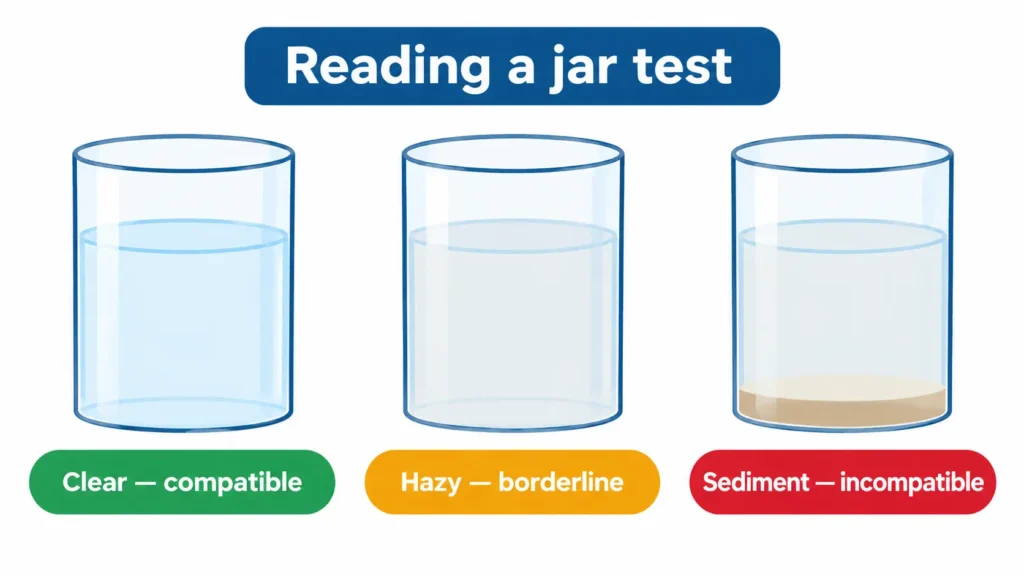
2,4-D DMA salt 720 g/L SL is a true solution until water quality or mix partners interfere. Hard water, UAN tank mixes and cold storage, handled correctly.
2,4-D 98% TC: Assay, Impurity Profile and What to Specify
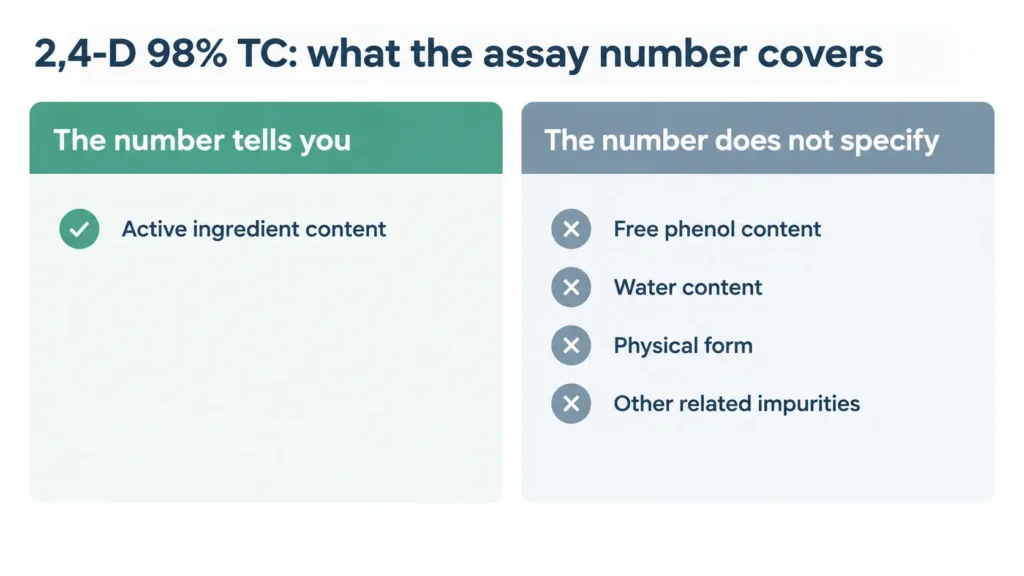
“98% TC” is a headline, not a specification. See which limits belong in a 2,4-D technical material order — assay, free phenol, water content and physical form.
2,4-D Amine vs Ester vs Sodium Salt: A Buyer’s Guide
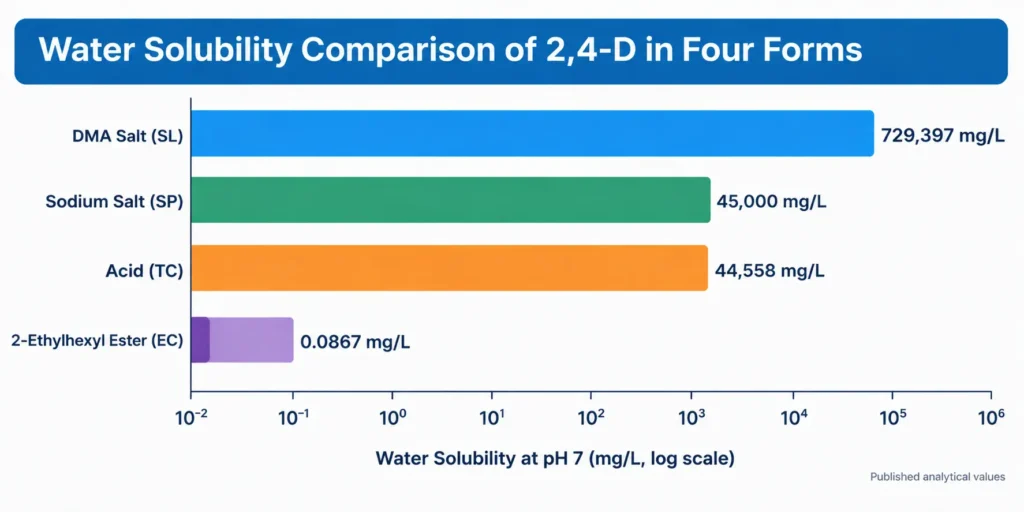
2,4-D amine, ester and sodium salt forms compared by water solubility, vapour pressure and acid equivalent. Guidance for importers choosing a formulation.